Ways of working
Role: VP, content - American Bankers Association
What: A unified creative studio, where collaboration is king, processes are mapped, and stakeholders are educated along the way
The challenge:
In-house writers, designers, tech, and marketers were responsible for producing the same deliverables, from conceptual ideation all the way to QA. But, we were working in silos.
The volume of work made it necessary to reset on craft identities and expectations, and build stronger ways of working before quality and morale were sacrificed
The goal:
Show the organisation that the best way to create our creative is to follow the golden rule: Design is content is design. Writers and designers work in lockstep to develop holistic solutions, which requires research, a solid intake process, and artistic license.
What I did:
Roles and responsibilities task force: Find out what we’re currently doing, and what we think we are responsible for doing
Document the gaps: Find out what we’re not doing but should be. Then, map the ideal process.
Enforce a new kickoff process, with creative brief, in-person meetings, and shared marketing plan
Build the process into a shared workflow management tool (in this case, Workfront) and upskill
Incorporate key steps like QA and analysis documentation into the definition of done, with a new project library
Make it fun - never skip an ideation session
Role: UX writer + content designer - Booking.com
What: A new UX-to-product collaboration process for ideation, proposal, and implementation
The challenge:
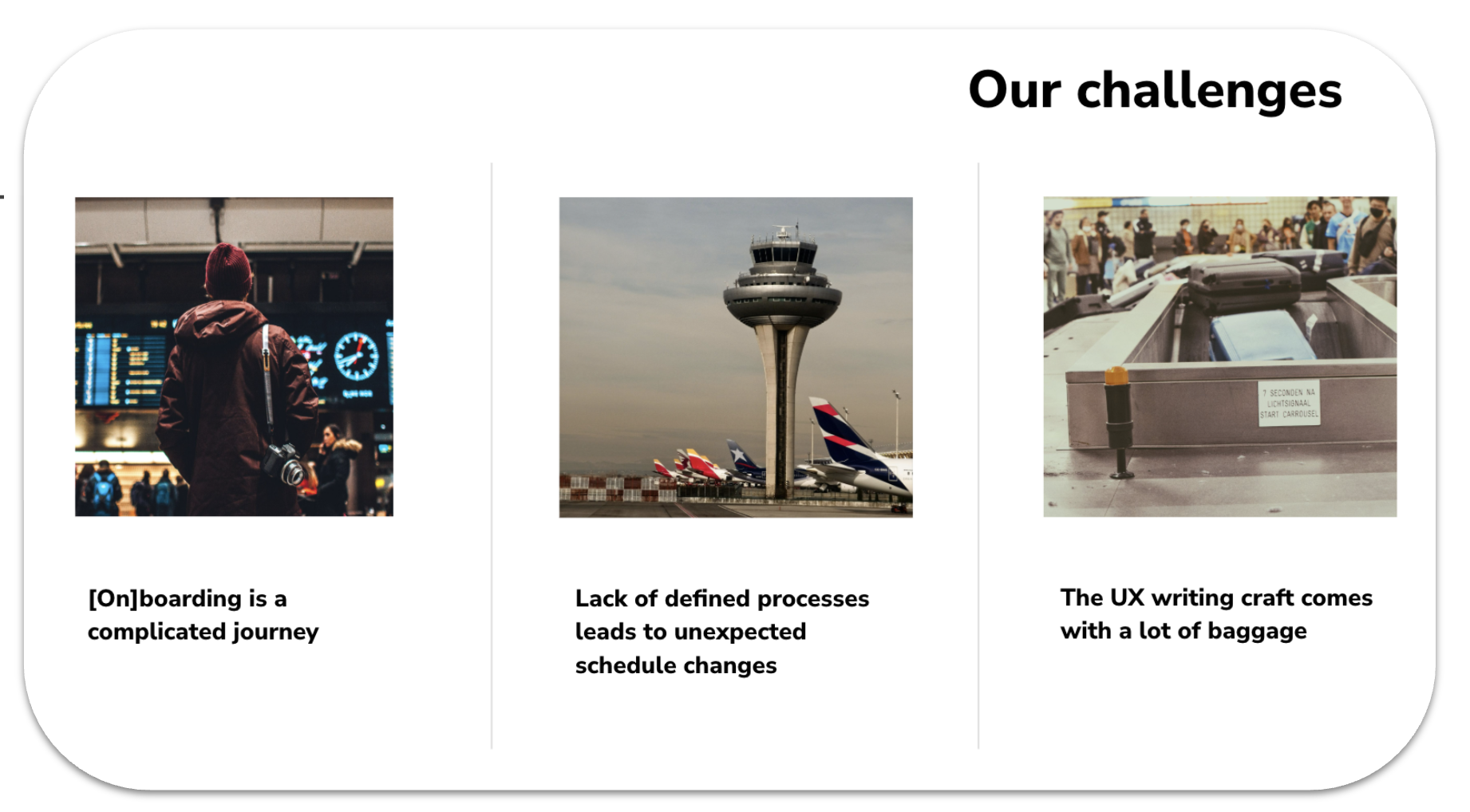
Scoping and prioritizing product’s roadmap was lacking a unified, circular process. This led to unrealistic deadlines, a lack of customer-centric solutions, and low morale. Designers felt like ticket takers, and the exploration phase for UXers was often skipped entirely.
The goal:
Agree to a way of working that highlights each role’s expertise and drives more successful experimentation
What I did:
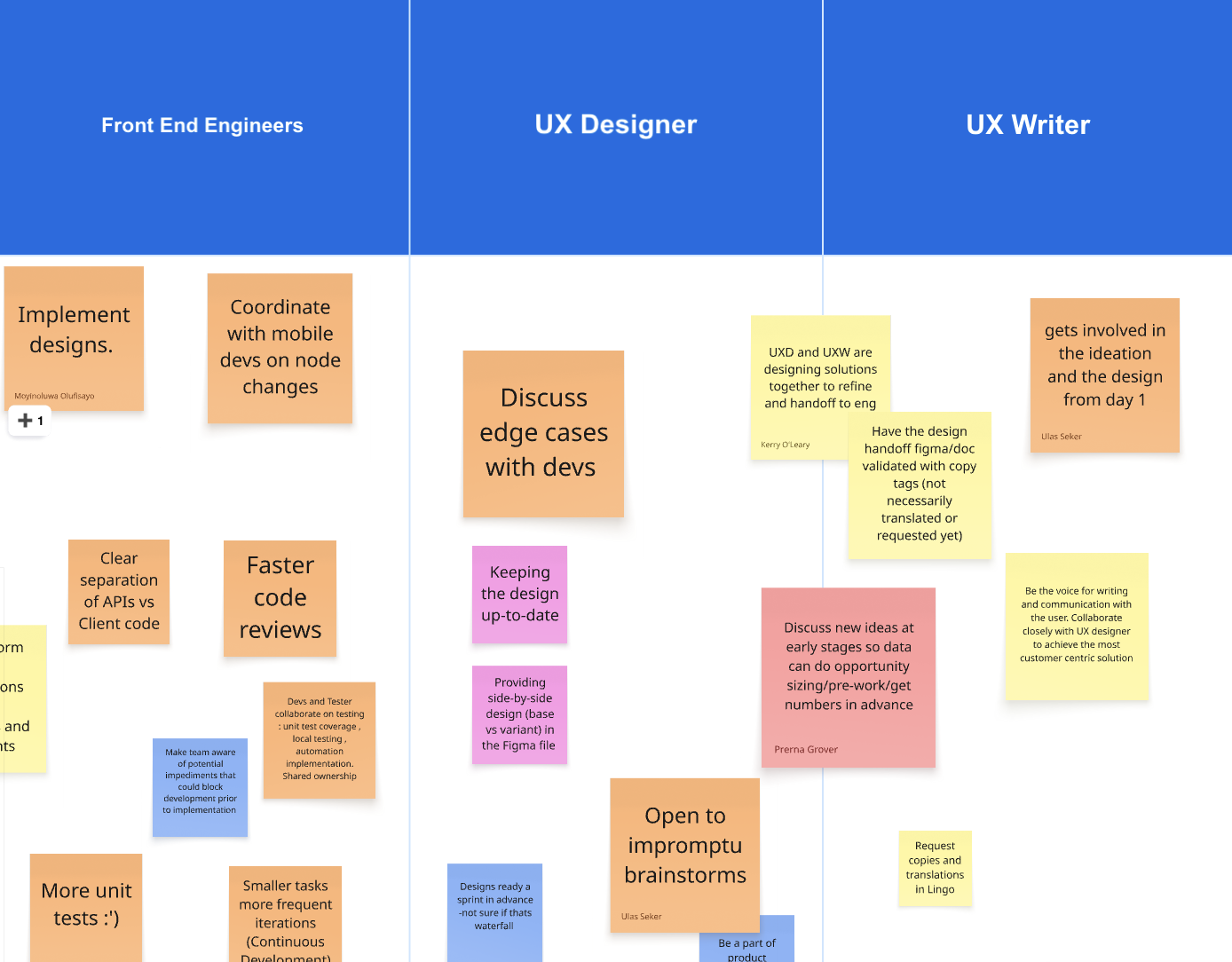
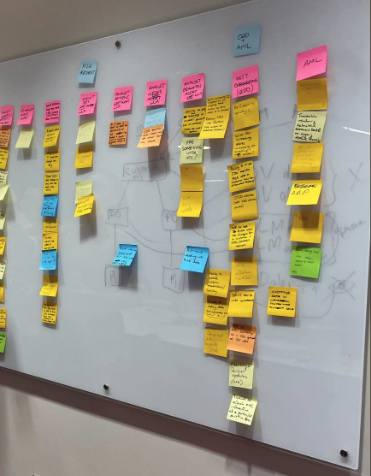
Workshop: Define each craft’s needs and expectations
Documentation: Map the product development process and key collaboration touchpoints
Rituals alignment and commitment: agree to a regular cadence of joint planning and prioritization to ensure user needs and pain points are addressed in a timely way, and to balance must-do sprint work with UX strategic vision
Product development process, workshop results:
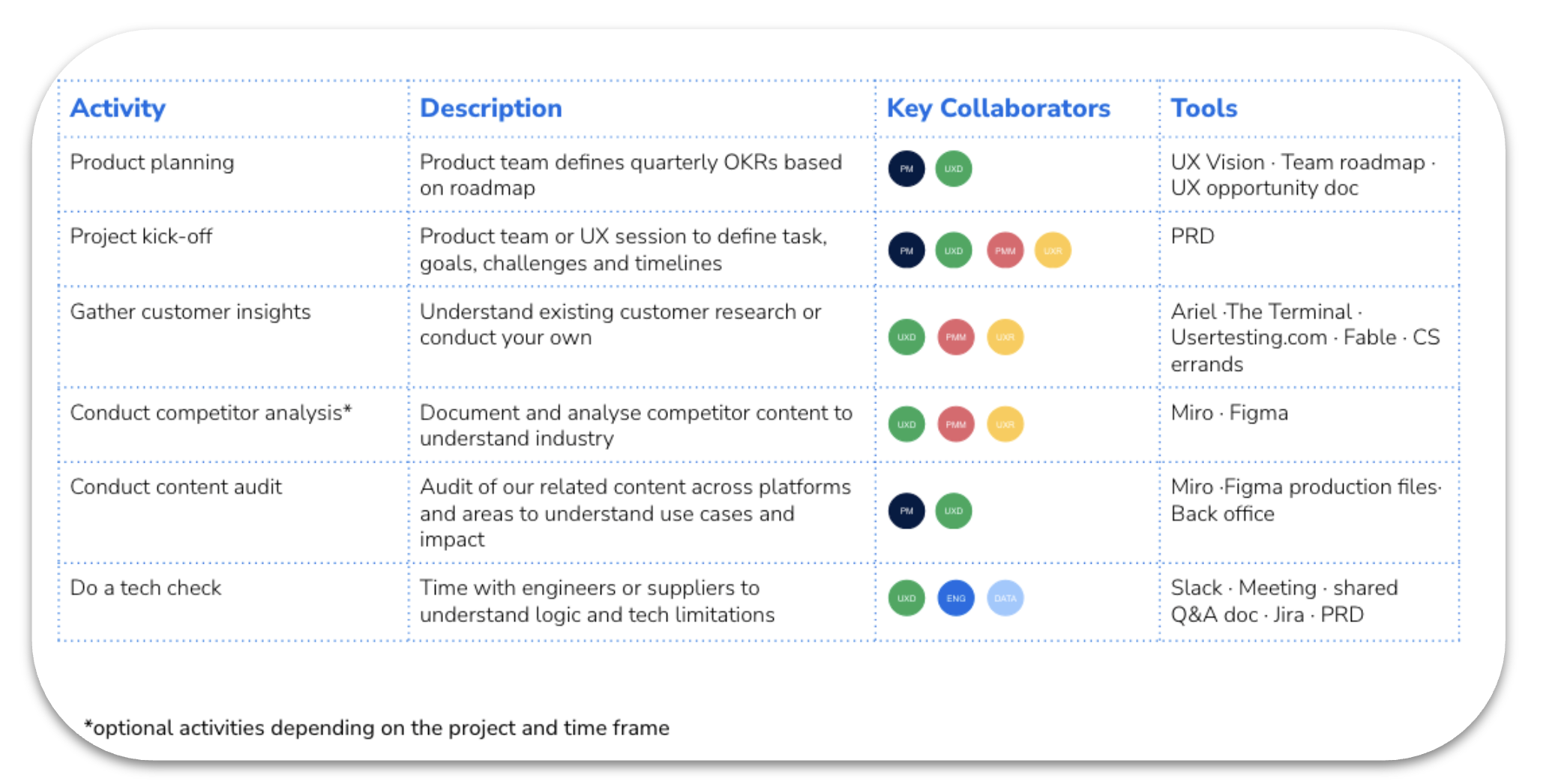
To scale the findings further, I created a ‘What is a UX writer?’ presentation in response to workshop outcomes. As it turns out, most roles across the business were unfamiliar with the core objectives and responsibilities of content designers, so this helped clarify the how, and more importantly, the why.
Impact:
UX writers involved early and often
Less solutionizing from non-UX colleagues, and more creative freedom for UX
UX writers and designers represented in JIRA for better visibility and respect for capacity
Engineers see UX colleagues as teammates, and not just for the ‘handoff’